AfriLabs Hosts First AU-AU Study Visit in Nigeria under the EMERGE Project to Accelerate Africa’s Clean Energy Transition
July 9, 2025
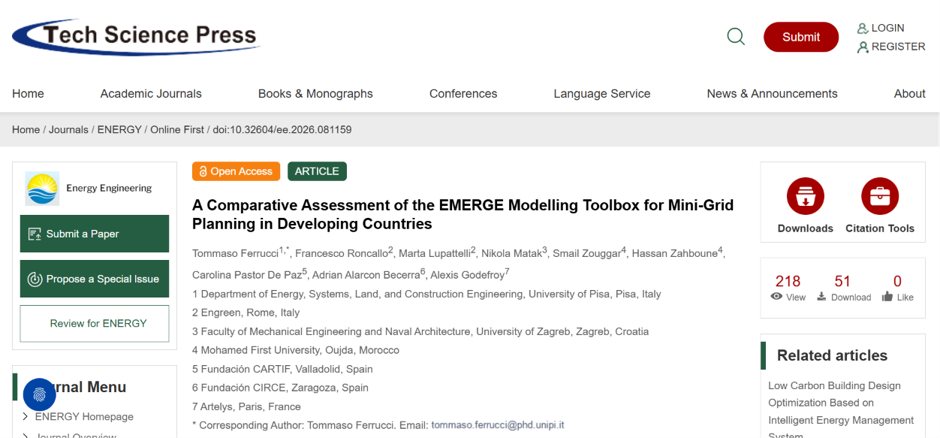
New Scientific Papers from EMERGE Partners Map Morocco’s Clean Energy Future
July 29, 2025
Abuja, Nigeria | 9–10 July 2025
The first AU-AU Study Visit under the EMERGE Project – Energy System Modelling for Green Development of Africa marked a significant milestone in advancing clean energy collaboration across the continent. Held from 9–10 July 2025 in Abuja, Nigeria, the high-level gathering brought together energy policymakers, technical experts, and innovation leaders from Nigeria, Mali, Morocco, and Mozambique for an intensive two-day exchange focused on inclusive, locally rooted, and scalable energy solutions.
Hosted by AfriLabs, a key implementing partner within the EMERGE consortium, the event exemplified the project’s core mission: to equip African stakeholders with practical tools and data-driven strategies for accelerating clean energy transitions tailored to the region’s unique socio-economic and environmental contexts.
Responding to Africa’s Energy Imperative
Africa continues to face intersecting energy challenges – from low electrification rates and climate vulnerability to the growing pressure of rising demand. While contributing minimally to global emissions, the continent disproportionately suffers the consequences of climate change. The EMERGE initiative, funded by Horizon Europe, aims to bridge this gap through regional knowledge exchange, locally anchored innovation, and participatory energy system modelling.
Day One: Ground Realities and Strategic Insights
Opening the event, Anna Ekeledo, Executive Director of AfriLabs, underscored the urgency of fostering energy systems that reflect Africa’s realities: “We must prioritize solutions that are not only sustainable but indigenous—built by and for Africans.”

Photo: Anna Ekeledo, Executive Director of AfriLabs
Delegates engaged directly with national institutions including the Rural Electrification Agency (REA), the National Agency for Science and Engineering Infrastructure (NASENI), and Sustainable Energy for All (SEforALL). Sessions focused on real-time innovations in rural electrification, policy reform, and financial instruments like the M300 model, which unlock capital for green infrastructure.
In a keynote session, Khalil Halilu, Executive Vice Chairman and CEO of NASENI, emphasized:
“The energy transition is not just about carbon, it’s about dignity, development, and direction.”
He highlighted NASENI’s efforts—from manufacturing solar panels and inverters to developing ZECO, Nigeria’s first indigenous electric vehicle.
Three thematic panels tackled:
- Aligning policy and institutional capacity
- Financing energy solutions for underserved regions
- Deploying context-specific technologies in African ecosystems
Day Two: From Dialogue to Action
The second day moved beyond discussion to field-based learning. Delegates visited the 3MW Solar Hybrid Power Plant at the University of Abuja, developed under the World Bank-supported Energizing Education Programme and implemented by REA. The system, operated by EM-ONE through an Energy-as-a-Service model, includes a 2MWh battery and powers the university reliably, also serving as a learning ground through its Renewable Energy Training Centre.
Another highlight was the visit to the PCNGI – Presidential Compressed Natural Gas Initiative, where participants explored Nigeria’s national strategy for clean transport alternatives in response to fuel subsidy reforms. Engr. Michael Oluwagbemi, CEO of PCNGI and Trustee of AfriLabs, offered insights into infrastructure rollout and public-private collaboration for clean mobility.
The final site visit took delegates to the Electric Motor Vehicle Company (EMVC) manufacturing plant. Prince Mustapha Audu, CEO of EMVC, led participants through a showcase of the company’s vehicle evolution—from early prototypes to the Adoja Series and the culturally inspired Obong Series three-wheelers. A hands-on test drive demonstrated the potential of African-made electric vehicles for the continent’s mobility transition.
A Blueprint for Regional Energy Transformation
The AU-AU Study Visit reflected EMERGE’s vision in action: connecting regions, institutions, and practitioners to co-create energy solutions that are scalable, inclusive, and grounded in African realities. Delegates left with renewed momentum for collaboration, equipped with actionable knowledge and strengthened cross-border networks.
About EMERGE
EMERGE is coordinated by UNIZAG-FSB and brings together 11 partners from 9 countries across Europe and Africa, including:
AfriLabs (NG), Artelys (FR), BrainIT (HR), CARTIF (ES), CIRCE (ES), ECREEE (CV), UEM (MZ), EnGreen (IT), ESEIA (AT), and Mohamed First University (MA). The project is developing a Toolbox and Knowledge Base tailored to three African ecosystems: North-Western Africa (Morocco), the Niger River Region (Mali/Nigeria), and East Africa (Mozambique).
The Abuja Study Visit marks the first of several collaborative milestones in EMERGE’s multi-year journey to support African-led, data-driven green development.